
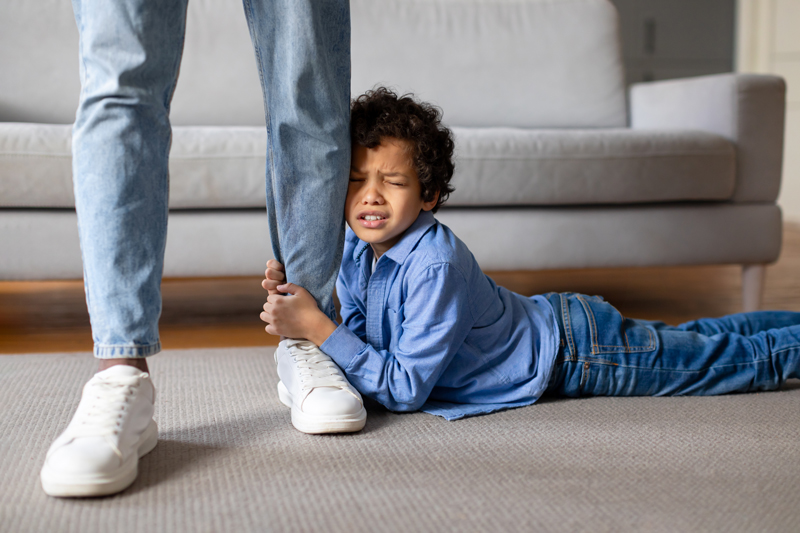
Separation anxiety can feel especially overwhelming when it begins to interfere with daily routines that your family once managed with ease. Even when you know your child will be okay, the emotional weight of separation can still be difficult for both of you.
Children are biologically wired to feel safest when they are close to a caregiver. This physical and emotional closeness helps children regulate strong emotions and feel secure to explore their world. If your child struggles with separations, it does not mean something is wrong. In many cases, it reflects a strong attachment, is developmentally appropriate, and may signal that your child needs extra support during times of uncertainty.
Children with separation anxiety, on the other hand, experience an intense fear when separating from their parents or individuals closest to them, beyond what’s typical for their developmental stage. This is often evident when anxiety becomes more disruptive and starts spilling into everyday life—getting ready for school is challenging, bedtime drags on, or once easy activities like dropping off your child for a birthday party suddenly feel overwhelming. If this sounds familiar, you’re not alone and there are ways to help that don’t involve forcing independence or pushing your child faster than they can handle.
Let’s explore what separation anxiety can look like, why it happens, and how you can support your child with care and consistency.
What Separation Anxiety Can Look Like
Not every child shows separation anxiety the same way. Some children talk about their fears, while others express it through their behavior, sleep patterns, or physical complaints. While younger children are most likely to feel anxious at the time of separation, older children sometimes get anxious when thinking about or anticipating a future separation.
Here are some common signs that your child may be experiencing separation anxiety:
- Crying, clinging, tantrums, or refusing to let go at drop-off
- Frequent stomachaches, headaches, or complaints of “not feeling well” when you’re about to be apart
- Repeatedly asking where you’re going or when you’ll return
- Frequent calls asking you to come home
- Difficulty falling asleep without you nearby or refusing to attend sleepovers
- Avoiding activities, such as playdates or extracurriculars, if it means being away from you
- Big reactions to small separations, even within the home
- Ongoing worries that something bad will happen to you
What is the Root Cause of Separation Anxiety?
Separation anxiety can show up for many reasons, and it can look different from one child to the next. For some children, it develops after a life change or stressor, such as starting a new school, moving to a new neighborhood, or experiencing an illness or loss in the family. In other cases, separation anxiety has a family connection. Children whose parents have experienced anxiety may be more likely to struggle with anxiety themselves.
However, separation anxiety doesn’t always have a clear trigger or major event behind it. What matters most isn’t pinpointing a cause, but how we respond—with understanding, stability, and support that helps children feel more capable over time.
5 Ways You Can Support Your Child’s Separation Anxiety at Home
Small changes at home can make a meaningful difference. While these strategies aren’t a replacement for individualized support or working with a child therapist, they can help lay a strong foundation. By focusing on structure, connection, and gentle repetition, these tips offer practical ways to ease separation struggles and help your child feel more secure.
1. Create Predictable Goodbyes
Create a simple, consistent goodbye routine, such as a hug, a familiar phrase, and a wave. Small routines can help reduce uncertainty and make transitions feel more manageable. However, be sure to keep goodbyes brief. Long, drawn-out farewells can unintentionally increase distress and make separation more difficult.
2. Acknowledge, Don’t Dismiss
Instead of saying, “You’re fine,” try saying, “I know you’re nervous about going to the birthday party tomorrow, but I know you can handle it, even though it feels hard.” Validating your child’s feelings helps them feel understood. Simultaneously communicating confidence in their ability to cope is also key.
3. Avoid Sneaking Away
Although it may feel easier in the moment, sneaking away can increase anxiety over time if your child feels unsure about when you will return. A clear, loving goodbye and setting honest expectations about when you’ll be back will help build trust with your child.
4. Practice Separation in Small Ways
Start with short separations in low-pressure ways, such as playing in another room, spending time with a trusted caregiver, or doing brief drop-offs with a clear pickup plan. Small, repeatable separations build confidence and a sense of accomplishment.
5. Celebrate Small Wins
A “win” doesn’t have to mean separating without tears. If your child felt upset and still got through it, that counts. Acknowledge your child’s effort with statements like, “You did something that was hard for you and I’m proud of you.” Praise or small rewards can encourage brave behavior.
When Therapy Can Help with Separation Anxiety
At times, despite your support at home, your child still feels stuck. School mornings are daily battles. Sleep has not improved. Over time, your child’s separation anxiety starts shaping your family’s routines, decisions, and stress levels.
You do not have to wait until the situation feels overwhelming to seek support. In fact, anxiety can become stronger and more challenging to treat over time, so intervening early is beneficial.
Therapy can help your child make sense of anxious feelings and learn tools that help separations feel more manageable. The goal isn’t to rush your child or force big leaps. It’s to build comfort and confidence in small, steady increments.
What Support Looks Like at Positive Development Psychology
At Positive Development Psychology, we support families in navigating separation anxiety in a calm, practical, and supportive way. Our approach is structured, collaborative, and focused on building confidence over time. Therapy might include developmentally appropriate sessions with your child, along with parent sessions to provide you with tools to utilize at home.
We address separation anxiety using evidence-based anxiety treatments, including Cognitive Behavior Therapy (CBT) and Supportive Parenting for Anxious Childhood Emotions (SPACE). Let’s take a look at how these approaches can help your child and family.
CBT for Separation Anxiety
Cognitive Behavior Therapy (CBT) can be very effective in helping children with separation anxiety because it gives them practical, age-appropriate tools to understand and manage their worries. Rather than simply reassuring a child that “everything will be fine,” CBT helps them build real confidence by learning new ways to think about and respond to separation.
CBT can help children:
- Learn how worry shows up in their body sensations and thoughts
- Use calming strategies, like relaxation techniques or coping statements
- Replace worries and “what-ifs” with more balanced, helpful thoughts
- Take small, supported steps to expose them to separations to build confidence and reduce anxiety
These skills help children feel more capable, resilient, and secure—even when they’re apart from the people they love most.
SPACE Support for Parents
Supportive Parenting for Anxious Childhood Emotions (SPACE) is another evidence-based approach we use to support families when separation anxiety begins to disrupt daily life, making school drop-offs, bedtime, or leaving your child with a babysitter difficult. Rather than focusing directly on changing your child’s behavior, SPACE focuses on helping parents respond in ways that reduce child anxiety while preserving warmth, connection, and consistency.
SPACE does not ask children to push through fear on their own. Instead, it helps parents gently adjust patterns at home that may unintentionally maintain anxiety, while continuing to validate their child’s feelings and to communicate confidence in their child’s ability to cope and grow. Since SPACE is a shorter-term treatment and parent sessions can be held virtually, it offers both convenience and effectiveness, making it an appealing option for many families seeking support for their child’s anxiety.
Using SPACE strategies, we help parents:
- Identify accommodations that have developed over time, such as repeated reassurance, extra check-ins, staying nearby “just in case,” or changing plans to avoid distress
- Reduce those accommodations in small steps your family can implement with consistency
- Create a plan for the hard moments (like school mornings or bedtime), so responses feel steady and thoughtful rather than reactive
- Gradually foster their child’s independence
This approach can help children feel more confident coping with separations and help parents feel more empowered and less stuck in cycles of reassurance that don’t provide lasting relief.
You Are Not Alone in Supporting Your Child Through Separation Anxiety
If your child’s separation anxiety has started to shape your daily routines and is weighing heavily on your mind, you are not alone and you do not have to navigate it on your own. At Positive Development Psychology, we are dedicated to supporting families in Mount Kisco, Pleasantville, Chappaqua, and the surrounding Westchester area, both in person and virtually.
Contact us today to learn more or set up a free phone screening. Let’s take the next step together.