
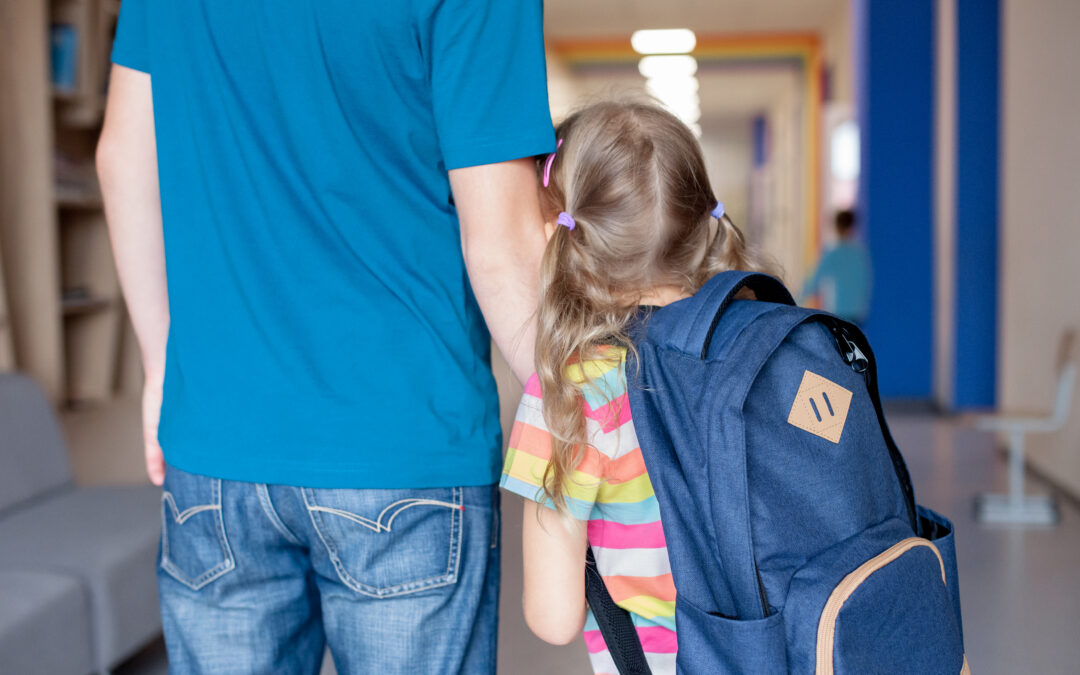
Before the first day of school, it’s common for children to experience a mix of emotions, from excitement to anxious anticipation. Many children feel nervous and get butterflies as they wonder about a new teacher, a different classroom, reconnecting with classmates, and adjusting to school routines after summer break.
For some children, however, back-to-school anxiety goes beyond typical first-day jitters. Their worries may affect how they feel and behave. They may also struggle with confidence about their academic performance or ability to develop and maintain friendships.
As a parent, it can be difficult to know the difference between normal adjustment or when your child needs support coping with back-to-school anxiety. Knowing the signs, how to respond, and when to reach out for support can help set your child up for a successful school year.
What Back-to-School Anxiety Looks Like
Back-to-school anxiety often looks different for every child and can be shaped by their developmental stage. However, there are several common signs that parents and caregivers can recognize.
Younger children may become more clingy than usual or have frequent tantrums as the first day of school approaches. Since they may not yet have the ability to express their worries clearly, their anxiety sometimes shows up through physical complaints such as stomachaches or headaches. While it’s always important to rule out an underlying medical condition, recurring complaints of not feeling well before school may indicate that school-related anxiety is at the root of the issue.
Older children and teens may be better able to identify and express their concerns, such as worries about increased homework, trying out for a new team, or fitting in with peers. Even so, many adolescents are hesitant to share their feelings. Instead, anxiety may appear as increased irritability, withdrawal, changes in mood or resistance to get out of bed and leave for school in the morning.
Children of any age may repeatedly seek reassurance, appear noticeably panicked before school-related events, or avoid situations that trigger their anxiety. In the classroom, teachers may notice difficulty concentrating, low confidence, reluctance to participate, or resistance to engage in assignments and peer interactions. Early recognition of these signs can help caregivers to provide the support children need and address back-to-school anxiety or another challenge before it escalates.
Is Back-To-School Anxiety Normal or Something More?
For many children, back-to-school anxiety is temporary and improves after they adjust to new routines, teachers, and classmates. However, for some children, these worries don’t fade with time. Instead, their brains begin to interpret everyday experiences as if they are dangerous, triggering the body’s “alarm system.” This can lead to a cycle of anxious thoughts, physical symptoms, and an urge to avoid situations that feel threatening which can get stronger over time. When anxiety persists, it’s important to figure out what may be underlying your child’s distress.
Children with a history of anxiety are often especially sensitive to transitions, making the start of a new school year a common trigger. For example, a child with separation anxiety may worry about something happening to a parent, making school drop-off or getting on the bus especially difficult. A child with social anxiety may fear speaking in class, joining peers at lunch or recess, or participating in group activities. Even children without a previous history of anxiety can find the transition back to school challenging.
Sometimes, a child’s back-to-school anxiety is actually a sign of another root challenge. A child with an undiagnosed learning disability or attentional difficulties may feel frustrated or embarrassed when schoolwork seems more difficult for them than it does for their classmates. These feelings and experiences can impact self-confidence and lead to reluctance to attend school.
If your child’s anxiety continues beyond the first few weeks of school or begins interfering with their daily life, it may be time to seek additional support. A child therapist can help identify underlying causes of your child’s distress and can help your child build confidence and develop healthy coping skills.
Practical Tips for Parents
Back-to-school time can be stressful for the entire family. As a parent, seeing your child experience anxiety or distress can be difficult. Thankfully, there are many small ways you can support your child as they head into a new school year.
Here are some strategies to help your child deal with back-to-school anxiety:
- Get back to basics. Daily routines are often more relaxed during the summer months. A few weeks before school starts, gradually ease your child back into consistent morning, mealtime, and evening routines. Reestablishing these expectations before the first day of school can help make the transition less overwhelming, especially once homework and after-school activities are added into the mix.
- Validate your child’s feelings. It’s normal for children to experience a range of emotions heading into a new school year. Listen to your child and acknowledge their feelings, rather than trying to immediately reassure them or minimize their worries. At the same time, express confidence in their ability to cope with the transition. If your child is worried about something specific, help them problem-solve any anticipated challenges.
- Ease the transition. If your child’s anxiety is running high, look for opportunities to help them acclimate before the first day of school. Arrange playdates with classmates over the summer to maintain existing friendships and foster new connections. If your child is attending a new school, drive by the school together, visit the building or classroom if possible, and attend new-student events. Even small opportunities to be exposed to new situations and what to expect can help your child cope and feel less overwhelmed.
- Notice and praise brave behavior. Pay attention to the moments when your child is courageous in the face of something difficult. Labeled praise helps children recognize exactly what they did well and makes them more likely to exhibit these behaviors again. For example, you might say, “I know saying goodbye was hard, but you gave me a hug and walked to your classroom. That was very brave of you.”
- Make time to relax. While it’s wonderful to encourage your child’s interests, an overpacked after-school schedule can leave little time to decompress after a long school day. Don’t underestimate the value of unstructured play or simply having time to connect as a family. Building in downtime can help your child refuel, feel less overwhelmed, and manage the demands of the school week.
- Build your village. Sometimes, anxiety can become significant enough to interfere with a child’s ability to participate or function at school. When that happens, you don’t have to navigate it alone. Seeking out a child therapist with expertise in anxiety treatments can help your child develop effective coping skills. A therapist can provide parenting support as well, helping you learn how to adaptively respond to your child’s back-to-school anxiety or underlying challenges. Connecting with your child’s school mental health team can also provide your child with an on-site support person in school. When appropriate, your therapist can collaborate with the school team to develop a comprehensive plan to best support your child.
How SPACE Can Help Kids Break Free From Anxiety
Supportive Parenting for Anxious Childhood Emotions (SPACE) is a parent-based treatment program for children and adolescents with anxiety disorders and obsessive-compulsive disorder (OCD). Developed at the Yale Child Study Center, SPACE takes a different approach from many child-focused anxiety therapies: the parents or caregivers are the ones who participate in treatment, even though the child is the one who is experiencing anxiety.
SPACE gives parents practical tools for responding to their child’s anxiety while focusing on changes they can make in their own behavior. A key component of SPACE is guiding parents in reducing accommodations, which are changes parents make to family routines or activities to ease a child’s anxiety in the moment. For example, a child experiencing school-related anxiety might ask a parent to sleep next to them on school nights, drive them to school after they refuse to take the bus, or allow them to stay home from school altogether.
With the support of a SPACE-trained therapist, parents learn to validate their child’s feelings while also communicating confidence that their child can handle the discomfort that comes with feeling anxious. SPACE also teaches parents to respond to their child without reinforcing avoidance, encouraging children to gradually face anxiety-provoking situations and develop their ability to cope.
SPACE can be used to address a range of anxiety-related concerns, including separation anxiety, social anxiety, specific phobias, generalized anxiety, and OCD, among others. For families dealing with back-to-school anxiety, this approach can provide a way to support their child while encouraging greater independence in managing school-related fears.
CBT for Child Anxiety
Cognitive Behavior Therapy (CBT) is one of the most well-researched and effective treatments for anxiety in children and adolescents. A CBT therapist can offer evidence-based strategies that help young people better understand, manage, and reduce anxiety. The premise of CBT is that our thoughts, feelings, and behaviors are connected, and that changing unhelpful thinking and behavioral patterns can help people feel and function better.
CBT typically involves learning about anxiety and how it persists, identifying and challenging worry-based thoughts, developing more helpful ways of thinking, and learning practical problem-solving skills. As children get ready to return to school, it’s common for them to worry about being apart from a parent, managing schoolwork, or navigating social challenges. CBT can help address the worries that often accompany this transition as they learn to identify anxious predictions, examine and challenge thoughts that are unhelpful or inaccurate and build coping skills.
Another important component of CBT for anxiety is exposure, which involves gradually facing feared situations while practicing coping skills in a supportive environment. A CBT therapist will work with your child and family to understand the specific worries underlying the anxiety, whether they involve separation, social situations, fear of making mistakes, or something else. From there, the therapist can create a personalized exposure plan that helps your child build confidence, develop coping strategies, and approach the new school year with greater ease. For a child experiencing back-to-school anxiety, this might also involve doing “test runs” to practice school-related routines before the first day.
When to Reach Out for Support
While some back-to-school anxiety is expected, when ongoing anxiety interferes with your child’s daily life, it may be time to seek additional support for your child and family. Anxiety can show up in many ways, from avoiding socializing at lunch or having difficulty developing friendships to hesitating to participate in class, join after-school activities, or self-advocate.
Addressing anxiety early can make a meaningful difference for both a child and their family. Anxiety disorders can persist over time and, without appropriate support and treatment, they may not go away on their own. In some cases, fears and avoidance can become increasingly difficult to manage.
At Positive Development Psychology, we are committed to helping children, teens, and families navigate these challenges. We support families in Mount Kisco, Chappaqua, Pleasantville, Armonk, and surrounding communities in our beautiful Westchester office. We also offer virtual services to families throughout New York and Connecticut, making it convenient to access support and individualized care.
Contact us today to learn more or set up a free phone screening. We will partner with your family to develop strategies to manage anxiety and help your child feel successful at school and beyond.